
The following information is aimed at users working with high-temperature sintering furnaces (up to 1800 degrees Celsius) with heating elements MoSi2 and purpose to clarify issues arising from their proper operation.
In short – heating element manufacturers describe them as follows.
1. Material – Molybdenum disilicide (MoSi2).
2. Operating temperature – e.g. 1700 degrees Celsius
3. Maximum temperature – e.g. 1800 degrees Celsius
4. Shape type, physical dimensions, zones – hot and cold, etc.
How it works – when the temperature increases, the element forms a layer of Silicon Dioxide (SiO2) around itself, which protects the main part from oxidation.
Ideally, everything is true and everything is accurate, but there is one condition – under proper operation.
Let's delve a little deeper into the physics of things without using complex scientific terms.
Sintering furnace manufacturers should realize the following conditions recommended by heating element manufacturers - correct installation in the chamber:
- Minimum distance from the furnace walls;
- Minimum distance from the element to be heated;
- Minimum distance from the bottom of the furnace;
- Correct installation from the top of the furnace;
- Use of correct ceramic retainers that do not create tension in the center distance of the heating element;
- Use of correct contact connections that are correctly installed, providing maximum contact surface area with optimal pressure to prevent heating caused by large flowing currents;
- Drainage of hot air coming from the chamber and penetrating into the gap around the heating element;
- Ensuring cooling of the contact connections;
- Ensuring cooling of the reflector covering the outer part of the chamber;
- Ensuring optimal currents and voltages for the specific heating elements;
Possible issues
Problems related to the strength of zirconia during sintering occur, when the temperature regime for the respective material is incorrectly programmed.
Problems related to the coloring of zirconia during sintering occur, when foreign particles get on the surface of the material or sintering is in an environment with metal oxides, which are the basis of all colorants.
Sources of contamination can be the materials used for the construction of the chamber, a contaminated and unsuitable firing environment, but the main source is the heating elements.
We will clarify some properties visually:
-fragility when cold heating element - this happens with improper installation, impact on the furnace or improper transportation.
-Disturbed to the oxide layer - the cause is thermal shock - sudden cooling - opening the furnace door at an inappropriate temperature.
- Overheating – the cause is incorrect temperature - may be due to a dirty thermocouple or contact of a heated element with something;
- Disruption of the oxide layer - cause - incorrect temperature regime, too slow temperature increase, resulting in recrystallization of the oxide layer in the range of 300-700 degrees Celsius.
The oxide layer will recover but the product will be contaminated.
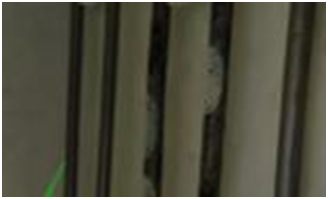
The contact of a heated element with the walls of a furnace or another object in the chamber also leads to the destruction of the oxide layer, resulting in product failure.
--------------------
Normal chemical-physical processes occurring to form an oxide protective layer on the heating element.
Physical processes occurring when the oxide layer is disrupted:
Physical processes occurring when a too thick layer is formed:
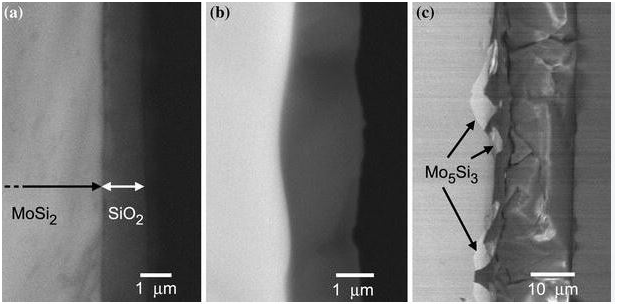
The user should systematically run a program for restoring the oxide layer, for example, every 10-15 working cycles. Also during transport, relocation or replacement of a heating element - but most importantly at the beginning.
The program for restoring the oxide layer depends on the installed heating elements, but it is recommended to be shorter than 1 working cycle for sintering zirconium /1 cycle is also not wrong/.
It is also recommended to use absorbent granules for 1 cycle every 10-15 to clean the environment.
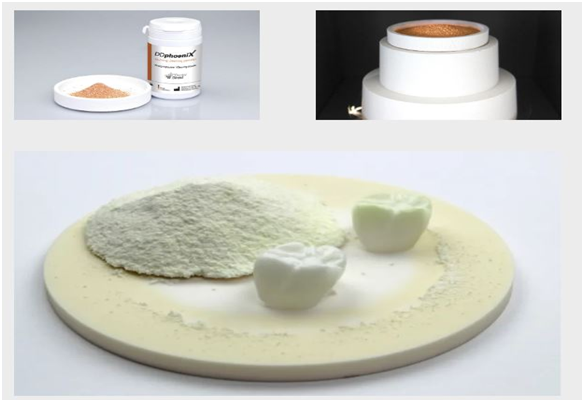
The use of a cover during sintering somewhat protects the workpiece from staining.
For excellent production results and long life of the heating elements, the user must establish the golden mean of operation.
